
Thank you for joining us in Prague
INHSU 2026 was our largest conference ever, with 786 registrations from 63 countries. Over 800 abstracts were submitted, resulting in 241 oral presentations by over 200 speakers, plus 378 posters.
A huge thank you to everyone who joined us and helped make this year’s conference possible. We hope the ideas and connections made in Prague stay with you long after the conference.

INHSU 2026 photos
Browse the photos from INHSU 2025 over on Flickr. You can download and use them with credit to INHSU. Why not share them on social media—tag us on LinkedIn or Facebook, or @inhsu_global on Instagram. Want a photo removed? Email [email protected].
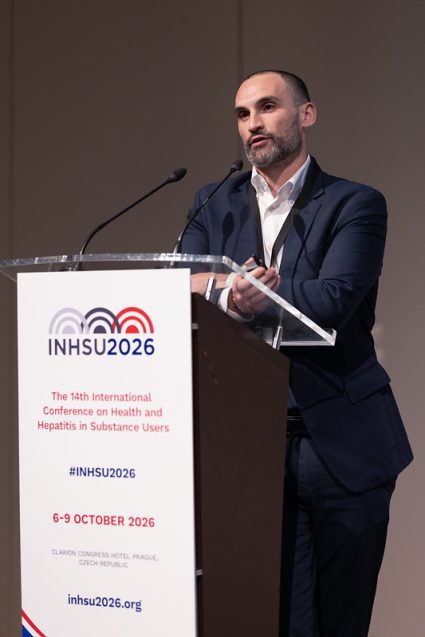
Rapporteur recordings
Each year, our conference concludes with rapporteur sessions, where experts summarise the key insights and takeaways from the week. These sessions offer a valuable opportunity to revisit important discussions, highlight emerging themes, and ensure that the knowledge shared at the conference continues to inspire action long after the event. Thank you to this year’s rapporteurs—it is no easy task, and we appreciate your hard work and input.
Pictured: Delivered by Dr Hunter Spencer, Associate Professor, Oregon Health & Science University (Clinical Science)
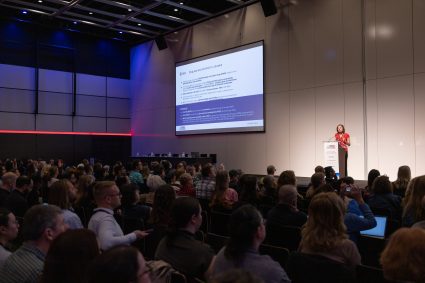
Daily News
Each day of the conference starts with the Daily News, an email sent to all delegates advising what not to miss that day and recapping highlights from the day before.
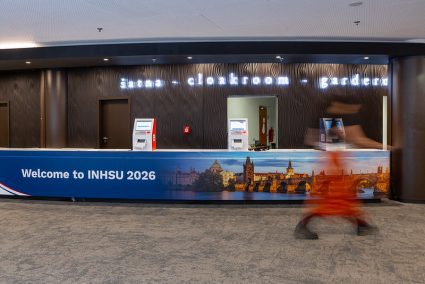
INHSU 2026 program
INHSU 2026 featured over 300+ sessions on hepatitis C and other infectious diseases, harm reduction and drug policy. There were tracks on epidemiology and public health research, clinical research, social science and policy research, and good practice models of care for people who use drugs.

INHSU 2026 Co-Conveners and Committees
Our conference would not be possible without the tireless knowledge and expertise of our local co-conveners, international executive committee, program committee, and other committees. Thank you to everyone involved.
Plenary speakers

Tetiana Deshko, Alliance for Public Health, Ukraine
Adapting Harm Reduction and Infectious Disease Models of Care in Conflict Settings

Professor Nadine Ezard, UNSW Sydney, Australia
Interventions for Stimulant Use: Clinical and Public Health Interventions

Anna Maria Ekström, Karolinska Institutet, Sweden
Understanding Drug Use Among Women: Epidemiology and Syndemics of Trauma, Mental Health, Gender-based violence, and Infection

Monica Gandhi, University of California, San Francisco, U.S
HIV Treatment and Prevention for People who Use Drugs: Clinical Advances and Implementation Science

Annie Madden, International Network of People Who Use Drugs (INPUD)
Beyond Participation: Leadership of People Who Use Drugs in Research and Evidence Generation
Why Prague?

Prague is known for its rich history and striking medieval architecture, but it also reflects both the progress and ongoing challenges of infectious disease prevention and treatment, drug policy and harm reduction.
The Czech Republic was one of the first European countries to decriminalise personal drug possession and has long been recognised for its harm reduction services.
These measures helped the country historically achieve some of the lowest HIV prevalence rates among people who inject drugs in Europe. The Czech Republic has also made significant progress in the prevention and control of hepatitis C.
But challenges remain. As with discussions globally, drug policy approaches, the scale-up of harm reduction models, and the ability to meet HCV elimination targets and end HIV as a public health threat remain subjects of ongoing discussion.
Prague is a powerful and timely setting for INHSU 2026, providing the backdrop to reflect on both achievements and barriers that continue to affect people who use drugs globally.
For delegates, Prague’s central European location makes it highly accessible, while its position at the crossroads of East and West provides a unique perspective on harm reduction’s evolution across diverse political and social contexts.
With thanks to local partners

Sponsors & Supporters
INHSU gratefully acknowledges the generous support provided by the following sponsors and supporters of INHSU 2026
Gold sponsor

Silver Sponsor

Destination Sponsor
The project is implemented with the financial support of the Capital City of Prague.
